Academic writing requires effective communication skills along with proper formatting. A researcher devotes many years to research and collecting valuable information. Drafting a manuscript takes immense focus and dedication. The last stage prior to submitting to a journal is to polish the language.
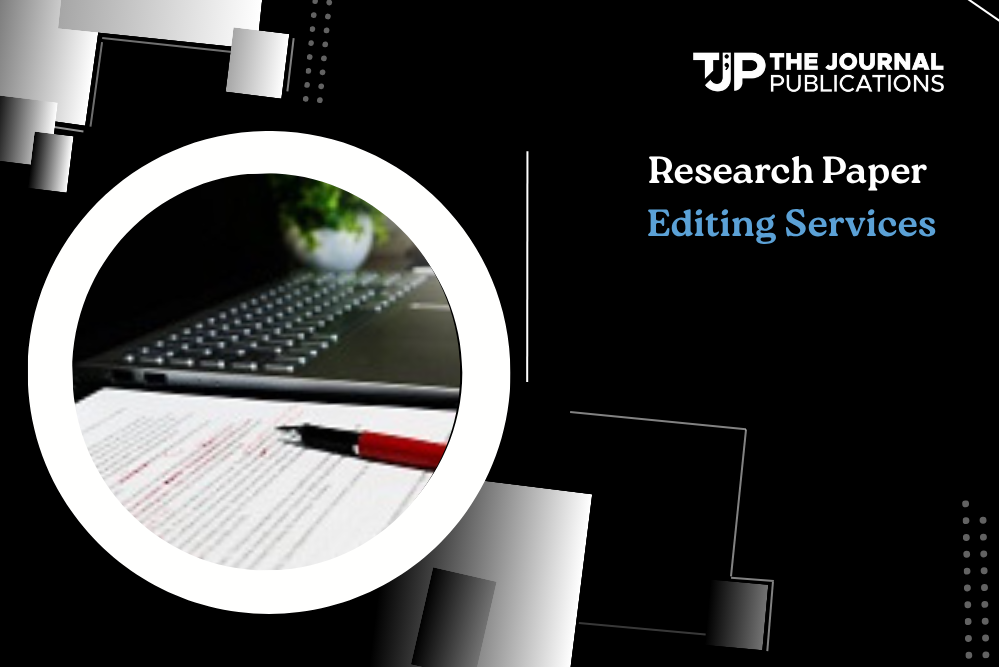
This comprehensive guide explains how research paper editing services facilitate this essential step. An academic editor helps refine sentence structure and logical flow. They ensure the text meets the rigorous demands of academic publishing. Their primary goal is never to alter the data or the underlying research. Instead, they focus entirely on making scholarly communication accessible. The author retains full control over their intellectual contribution at all times.
We will explore the different levels of professional review available today. You will discover exactly what an expert does during the revision process. This information will guide you in selecting the highly specialized support required for your work.
What Is a Research Paper Editing Service?
You might initially wonder what is editing in research and how it functions practically. It is a structured professional review process that elevates the clarity of a manuscript. An academic editor carefully reviews your text to fix grammar and enhance overall readability. They ensure the tone matches the formal expectations of standard academic language. This meticulous step is vital for effective and accurate scholarly communication.
Utilizing editing services for research paper refinement means hiring an expert to evaluate your document. They search for awkward phrasing and correct underlying structural issues. The editor never changes your scientific facts or primary conclusions. They strictly polish the language to help your core ideas stand out better.
- Editors correct basic spelling errors and typos.
- They improve sentence flow and grammatical structure.
- They align formatting with academic journal requirements.
These experienced professionals understand the highly specific needs of scientific editing. They show great respect for the author’s original voice during the whole editing process. A reputable service will assign an expert who understands your specific field of study. This ensures they correctly recognise standard terminology and complex industry phrasing. The final research manuscript remains entirely your own creation.
Types of Editing: Know What You’re Paying For
Understanding the different tiers of language review is essential before hiring a professional. Each distinct level addresses a completely different stage of the writing process. Selecting the correct service prevents paying for unnecessary corrections.
Proofreading
Proofreading serves as the most basic level of professional review available. A language expert checks your document for standard spelling and minor punctuation errors. They correct obvious grammatical issues and catch hidden typographical errors. High-quality academic proofreading ensures basic formatting consistency across the entire text. This step is perfect for a polished document requiring just a final surface check. Many scholars rely on research paper proofreading immediately prior to their final submission. It provides peace of mind that silly mistakes will not distract the reviewer.
Copyediting
This specialized level goes much deeper than basic error correction. A trained professional focuses heavily on sentence structure and proper syntax. They ensure the text maintains a consistently formal academic tone throughout every single section. When you request copy editing research paper assistance, the expert verifies complex terminology consistency. They rewrite awkward phrases to boost overall readability.
- Correcting confusing run-on sentences.
- Fixing poor transitions between paragraphs.
- Ensuring consistent terminology usage globally.
Substantive/Developmental Editing
Substantive editing is an incredibly intensive review of your entire document. The editor critically examines the core argument structure and overall logical flow. They ensure your primary research question is stated perfectly in the introduction. The best online editing services for research paper support will scrutinize each individual section. They review the methodology and evaluate the literature review for absolute clarity. The editor confirms that the discussion section logically supports your final conclusion. This service highlights structural areas where your logic might confuse a reader. It does not conduct the underlying research on your behalf.
Journal Formatting and Citation Editing
Flawless formatting is a very strict requirement for academic publication today. Editors expertly format your document according to highly specific journal guidelines. They structure your headings properly and adjust the page margins.
- Formatting text in APA or MLA styles.
- Applying Chicago or Harvard publication rules.
- Adjusting complex Vancouver reference formats.
An editor reviews your complete reference list for total accuracy. They ensure all in-text citations match the final bibliography perfectly. They also verify that every DOI link functions correctly. This precise attention to detail prevents immediate formatting rejections from strict publishers.
What’s Usually Included in a Professional Edit
You should clearly understand what deliverables to expect from a service provider. Most professional companies return your final manuscript with the Track Changes feature activated. This visual feature allows you to see every single modification made to the text. You always maintain total control over accepting or rejecting each individual change. This transparency builds trust between the author and the language specialist.
Quality editing services in research paper processing include highly detailed editor comments. The editor leaves thoughtful notes on sections requiring your direct attention. They might politely ask for clarification on a particularly complex scientific sentence. Many top companies also provide a comprehensive editor report alongside the text. This separate document summarises the major structural changes made to your work.
- A detailed style sheet for future consistency.
- Specific educational notes on grammar improvements.
- Targeted suggestions for enhancing overall academic tone.
The assigned expert never alters your core data or scientific findings. They might point out missing references if they notice a clear literature gap. The primary goal is returning a clean manuscript that accurately reflects your hard work. You typically receive a clean version alongside the marked version. This practice makes it very easy to read the final polished product.
Why Editing Matters for Journal Acceptance
A flawlessly written text is very crucial in today’s academic world. This will give you a very good chance of getting through the first phase of editorial screening. Poor language quality can frequently lead to a frustrating immediate desk rejection. A busy journal editor often rejects messy texts before the peer review phase begins. They simply do not have the extra time to decode confusing or broken sentences.
Relying on editing services for research paper preparation helps prevent these early administrative rejections. A beautifully written text allows the reviewer to focus entirely on your science. They evaluate your methodology instead of battling with poor grammar. High manuscript quality demonstrates deep respect for the publication’s high standards.
- It shows strict attention to author guidelines.
- It makes the complex reading process easier.
- It presents your findings clearly and professionally.
You must remember that an editor cannot ever guarantee journal acceptance. The final publication decision always depends entirely on the merit of your underlying research. However, exceptionally clean language ensures your hard work gets a truly fair evaluation. It effectively removes unnecessary communication barriers between your research and the review committee. This clarity gives your scientific findings the spotlight they truly deserve.
Human Editors vs. AI Editing Tools
Modern technology has introduced entirely new ways to review written documents. Many researchers now utilize artificial intelligence for very quick spelling checks. A standard algorithmic grammar checker can catch simple typos incredibly fast. However, generative AI has very significant limitations within the realm of academic publishing. A generic large language model does not truly understand nuanced scientific context.
Using research paper editing software is acceptable for a rapid initial pass. It highlights repetitive words and catches basic punctuation errors easily. But AI writing tools frequently misunderstand highly complex scientific terminology. They might incorrectly suggest changing a standard scientific term into an inaccurate synonym. This can destroy the actual meaning of your careful analysis.
- Software lacks deep subject expertise.
- AI cannot verify highly complex logical arguments.
- Automated tools easily miss subtle contextual clues.
A trained human editor deeply understands the exact context of your specific field. They safely maintain your core research integrity while vastly improving the language. Human professionals easily recognize the subtle nuances of highly specialised disciplines. They intuitively know when a complex passive sentence is strictly necessary for accuracy. They provide a vital level of critical thinking that software simply cannot match. Humans read for actual scientific meaning rather than just basic algorithmic pattern recognition.
How to Choose a Research Paper Editing Service
Selecting the perfect company requires very careful consideration of several key factors. You must always review the specific editor credentials offered by the platform. It is absolutely vital to find someone with verified subject expertise in your exact field. The best online editing services for research paper preparation always match you with a specialist. They never assign a complex medical paper to a general history expert. Proper matching guarantees the reviewer understands your specific discipline perfectly.
You should request a short sample edit before committing to a massive project. This step allows you to properly evaluate their specific style and attention to detail. You must also check the guaranteed turnaround time for the proposed project. Make certain their delivery schedule aligns perfectly with your target submission date.
- Compare the different pricing models carefully.
- Verify their strict data confidentiality protocols.
- Read the complete post-delivery revision policy.
The best research paper editing services offer exceptionally clear terms upfront. They provide a highly detailed editing agreement to protect your valuable intellectual property. They must guarantee total confidentiality for all your unpublished scientific data. When comparing various research paper editing services, look for highly transparent communication practices. Choose a reliable provider that focuses strictly on language improvement and absolute clarity. A trustworthy partner will prioritize your academic success through honest and precise language support.
Pricing Comparison: What to Expect
Understanding the exact editing cost is a critically important part of the planning process. Most highly professional companies utilize a strict per-word pricing model. This approach is generally much fairer than a traditional per-page pricing structure. A standard document page can contain wildly varying amounts of text depending on margins. Paying strictly by the word ensures you only pay for exactly what you submit.
The total final cost depends heavily on the specific level of service you choose. Basic language proofreading is easily the most affordable option available to scholars. Standard professional copyediting costs slightly more due to the extra manual effort involved. Deep substantive editing remains the most expensive and time-consuming service category.
- The chosen service level impacts the final price.
- Total manuscript length dictates the baseline cost.
- Faster requested turnaround time increases the rate.
If you demand your document be returned in 24 hours, expect a significant premium fee. Planning well ahead and allowing a full week for review saves you money. Always demand a firm final quote based on your exact document word count. Do not ever accept vague estimates that might magically change after the work begins. Knowing the exact price upfront helps you manage your research grant funds effectively.
Editing by Discipline
When scholars ask what editing is in research, the exact answer varies greatly by discipline. Different academic fields require entirely different stylistic approaches to language review.
STEM and Medical Research
In the STEM fields, the primary focus is always on extreme precision and total clarity. An editor must deeply understand complex scientific terminology and exact industry phrasing. They accurately review standard medical terminology found in clinical research. The language must never distract from the core data presentation.
- Checking the complex methodology section deeply.
- Clarifying the final results presentation.
- Reviewing the complex statistical analysis text.
Editors carefully check that the written text perfectly aligns with your tables and figures. A scientific manuscript generally requires a highly objective and slightly passive tone.
Humanities and Social Sciences
The humanities require a significantly different stylistic approach than the hard sciences. Papers in these creative fields rely heavily on a complex theoretical framework. Editors closely follow the nuances of qualitative research and detailed narrative structures. They carefully review your comprehensive literature review for elegant thematic flow.
- Polishing the central academic argument.
- Clarifying the author’s nuanced interpretation.
- Checking specific dates in historical analysis.
The prose in these disciplines is often much more descriptive and intellectually engaging. Editors also spend significant manual time verifying highly complex academic citations in these fields.
ESL/Non-Native English Researchers
Academic publishing can be particularly challenging for brilliant scholars who natively speak other languages. Mastering formal academic English requires many years of dedicated practice and extensive reading. However, native language proficiency should never be a barrier to sharing great science globally. Editors specifically help international researchers completely bridge this frustrating communication gap.
They heavily revise awkward sentence structure for much better natural flow. The absolute primary goal is achieving total grammatical clarity for the final reader. They ensure the final text meets the expected academic tone of major publications.
- Fixing confusing direct translation errors.
- Removing informal phrasing.
- Improving overall academic vocabulary choices.
This specialized support helps brilliant scholars publish in prestigious English-language journals. The editor ensures the language sounds highly natural and deeply authoritative. This professional assistance allows the author’s true intellectual contribution to shine clearly.
Choosing Where to Publish: Open Access vs. Traditional
Selecting an appropriate target journal is just as important as writing the document itself. You must carefully choose between a modern open-access format or a traditional route. A traditional subscription journal completely hides your content behind a strict reader paywall. The publisher usually takes the full copyright in this classic publishing model.
The modern open access model makes your valuable work completely free for everyone to read. This greatly increases your overall research visibility and long-term citation potential. However, you likely pay an article processing charge to publish your work. The mandatory APC covers the internal costs of formatting and hosting the digital file.
- Consider the overall journal reputation.
- Review the average peer review timeline.
- Check the specific APC costs clearly.
Both publishing models strictly require rigorous peer review and high-quality control. The best online editing services for research paper formatting help with either choice. They rapidly adapt your polished text to fit the specific publisher guidelines perfectly. Matching the exact required style helps your paper move through the system much faster.
Common Mistakes Before Submitting for Editing
Many brilliant authors mistakenly rush the final preparation of their valuable documents. This unfortunate haste leads to very common errors before sending the file to an editor. One major mistake is completely ignoring the specific journal guidelines during the drafting phase. Authors frequently forget to review the official manuscript checklist provided online by the publisher.
When editing a research paper, a professional desperately needs all your final files together. Sending highly incomplete references makes it completely impossible to check the bibliography accurately. You must always include all relevant figures and data tables in your initial package.
- Failing to check strict word limits.
- Omitting mandatory supplementary material files.
- Ignoring basic initial formatting rules.
You should always read the author guidelines fully before submitting your file for review. Ensure your digital document is as complete as possible before the actual edit begins. Giving the editor a beautifully complete package ensures a much better and faster final result. Taking this extra time prevents frustrating delays in the review process.
After the Edit: Final Steps Before Submission
Your hard work is not quite finished when the polished, edited file finally returns. You must very carefully review every single modification using the helpful Track Changes tool. Take your time to accept or reject each unique suggestion to finalise your text completely. When editing a research paper, the original author always has the absolute final say.
Once you successfully create the final manuscript, do one last highly detailed visual check. Ensure the document perfectly matches the strict author guidelines one final time. Do not rush this uploading process.
- Draft a highly compelling cover letter.
- Check the newly formatted references again.
- Verify the exact placement of figures and tables.
Gather all your required supplementary files carefully into one neat digital folder. Double-check that every single document is named correctly for the journal’s internal system. Finally, upload everything very carefully through the official online journal submission portal. Verifying your final digital proof guarantees the reviewers see exactly what you intend.
Conclusion
Preparing a complex document for successful publication requires immense daily effort and extreme dedication. Hiring a professional academic editor can easily relieve much of this associated stress. They expertly polish your manuscript so your true scientific findings can shine incredibly clearly. Using research paper editing services is a highly valuable investment in your academic career. It ensures your final journal submission looks extremely professional and highly polished. This crystal-clear communication heavily helps your work survive the rigorous peer review process. The editor focuses strictly on the language while you focus entirely on the science. Long-term success in academic publishing demands both excellent data and exceptionally clear writing. Enhancing your final text will properly highlight your underlying research quality for the entire world.
Frequently Asked Questions
-
What Do Research Paper Editing Services Include?
Professional research paper editing services generally include deep grammar correction and exact syntax improvements. Most services also offer specific journal formatting and highly detailed reference checks. You will always receive a document with all changes tracked clearly.
-
What Is the Difference Between Proofreading and Editing?
Proofreading is a final surface check for minor spelling and basic punctuation errors. Editing is a much deeper review that drastically improves logical flow and overall sentence structure. Editing completely rewrites awkward phrases while proofreading just fixes simple typos.
-
How Much Does Research Paper Editing Cost?
Total costs vary greatly based on the specific service level and your exact word count. Basic language proofreading is usually the most affordable option. Deep developmental reviews cost significantly more per word.
-
Can AI Tools Replace Human Academic Editors?
AI tools cannot fully replace human professionals in academic publishing. Software is great for catching simple spelling errors quickly. However, AI frequently misunderstands highly complex scientific context and specific industry terminology. Human editors preserve your exact meaning and ensure total research integrity safely.
-
Does My Publishing Route Affect Editing Requirements?
Yes, your chosen publishing route can dictate specific formatting rules. Open access and traditional subscription journals often have completely different internal style guidelines. An editor must format your document to match the exact publisher requirements perfectly.
-
Should I Edit My Paper Before Choosing a Journal?
You can do basic language cleanup before selecting a final target journal. However, final formatting should wait until you pick a specific publication. Each journal has unique rules for margins, citations and heading structures. Choosing the journal first saves time on formatting revisions.