Table of Contents
- Introduction
- What Is Editing, and Why Is It Important?
- Types of Editing in Writing
- How Does the Editing Process Work?
- What Editing Skills Should You Look For?
- How to Find Professional English Proofreading Services
- What Is Copy Editing, and How Is It Different?
- What Is Editing Text?
- Comparison Table: Editing Services Overview
- FAQs
- Author’s Bio
Being either a university student, an academic researcher, or a business professional, having polished writing is a matter of concern. Even the best ideas will be unable to overcome grammatical mistakes, inadequate clarity of sentences, and incorrectly put-together paragraphs. Thus, professional English proofreading services are of great help in this situation. In some cases, especially when dealing with technical and complex documents, hiring professional substantive editing services may be an option where the document would not only receive correction but also better clarity, flow, and readability.
It’s not just about finding a convenient service but one that will provide quality and credibility while communicating your ideas. It describes what editing is, the different types of services available, the editing process, and some practical tips which will go a long way in helping you choose the best provider.
What Is Editing, and Why Is It Important?
What is editing? In addition to mastering clarity, structure, tone and style of the written work. Whereas revising in general will require many rewrites of content, editing does not usually; it only serves to refine the text by ensuring that it is concise and fluent and of the correct tone and meaning.
The result of the question: What is editing in writing? Gives the chance to estimate the language, coherence, sentence flow, and logic of a written work. Indicatively, no one would even value the great findings in case the paragraphs of a research paper are not well organised. The editing guarantees clarity, conciseness and persuasiveness of your content.
Also, editing contributes to credibility. The slightest mistake in grammar or an off-putting wording can cause the readers to be disoriented, but an edited paper can be read as a sign that you are keen about details, professional and competent.
Types of Editing in Writing
Grasping what is editing in writing will be a great help in selecting the appropriate service. Here is a thorough breakdown:
Substantive Editing
Substantive editing, otherwise called developmental editing, looks into the content and the structure. It fortifies arguments, rearranges the paragraphs, and enhances logical transitions. This type of editing is necessary for complex academic or research-based documents, which makes substantive editing services quite worth investing in.
Copy Editing
Copy editing is a line-level improvement of your manuscript. It corrects grammar, punctuation, spelling, and ensures style-guide consistency—without changing the overall structure of your work. It’s ideal for essays, articles, and professional writing that only need refinement.
At The Journal Publications, our Premium Copy Editing Services provide deeper clarity, consistency, and polish to make your manuscript fully publication-ready.
Proofreading
Checking the work after writing is the last part of the work before submission or publication. It identifies small mistakes in spelling, punctuation, formatting and typing. It never changes the contents but just makes your text error-free and thus not confusing to the readers.
Revising vs Editing
The most common question: What is the difference between editing and revising? The revision includes structural work, a reorganisation of paragraphs, insertion of examples or clarification of an argument. Editing refines grammar, style, and readability. Both are processes which are absolutely essential if excellent output is required.
How Does the Editing Process Work?
Understanding how the editing process works will help you manage your workflow effectively. Here’s a step-by-step guide:
- Drafting: Writing a first document with no concern about perfection, but rather to get ideas down.
- Revision: Editing should include broader changes: reordering of the paragraphs, inclusion of information not provided, or removal of irrelevant information.
- Substantive editing: A professional editor evaluates the structure of your document, clarity, and flow of argument. He or she may rewrite sentences or suggest moving sections in order to enhance coherence.
- Copy Editing: The editor checks grammar, punctuation, and sentence structure for clarity and consistency.
- Proofreading: This is the last stage, where one ensures that the document has no errors and is ready for submission or publication.
This layered approach takes your document from rough draft to polished, professional piece.
What Editing Skills Should You Look For?
For high-quality editing, check for the following editing skills:
- Attention to detail: Editors have to find minute grammatical errors, typos, or inconsistencies.
- Structural Thinking: Recognises weak arguments or confusing flow and suggests improvements.
- Language Skills: Excellent in style, tone, and use of vocabulary, making it smooth to read.
- Communication: Great editors explain their changes clearly and provide actionable feedback.
- Adaptability: An editor should adapt an approach to fit your audience and purpose.
In one example, a student’s research paper could have very reliable data but have poor paragraph transitions. A good editor will fill in these gaps and, therefore, enhance the reading but still remain true to the author’s voice.
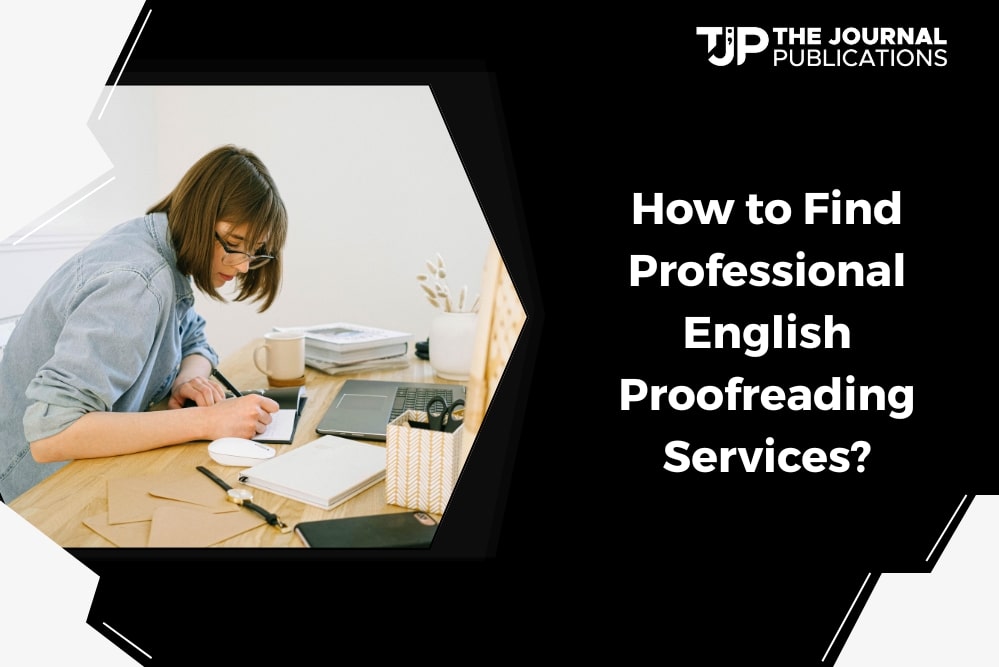
How to Find Professional English Proofreading Services
In that scenario, you will have to seek an English proofreading service that will assist in polishing, demystifying, and publishing your work. Keeping this in mind, we should ask ourselves a couple of questions that you might wish to ask when you want such a service: Do you only need to have surface corrections or do you require major editing to be made? Is the editor well-experienced in your field? Are they able to deal with such a document as an academic paper, a professional report or a creative manuscript?
Define Your Needs
First, know how much editing you need. A complex academic writing or research paper would best be handled by substantive editing, as this is going to address structure, flow of argument, and clarity. In the situation regarding essays, articles and professional texts, copy editing might be adequate as it allows for correcting the grammar, style, and readability without significant alterations in the content.
Research Reputable Platforms
Not all editing services are equal, so seek out reputable services like Enago, Scribendi, and Editage that can offer you specific services for an academic or professional document. Check to see if they have substantive editing services in addition to more standard proofreading or copy editing services available.
Check Credentials and Samples
Research potential editors based on qualifications, experience, and client feedback. If possible, request sample edits to understand their style, attention to detail, and effectiveness in improving your text.
Compare Costs, Turnaround, and Agreements
The costs vary greatly, as do the deadlines. Be very clear about your pricing, how long the work will take, and how many revision rounds are included. Written agreements or contracts protect both parties and clearly state the scope of work, payment terms, and deadlines.
These steps provide a way to confidently identify a professional English proofreading service for your needs, in order to ensure your work is polished, credible, and ready to be submitted.
What Is Copy Editing and How Is It Different?
Most people are confused about what copy editing is or why it is important. Copy editing concerns:
- Grammar, punctuation, and spelling
- Style consistency and adherence to guides
- Sentence clarity and readability
Unlike substantive editing, copy editing does not change the structure of the content; it rather polishes your writing to make it professional and free of errors. Merging copy editing with substantive editing means that your document will be logically strong and linguistically accurate.
What Is Editing Text?
When someone asks what editing text means, it refers to refining the existing content for clarity, flow, and coherence. This includes:
- Fixing sentence structure
- Improving paragraph transitions
- Adjusting tone and style
- Ensuring consistent terminology
Professional substantive editing services often combine text editing with structural suggestions, which helps make documents publication-ready or suitable for professional submission.
Comparison Table: Editing Services Overview
| S.No | Editing Type | Primary Focus | Ideal For |
| 1 | Substantive Editing | Structure, clarity, argument flow | Research papers, dissertations, books |
| 2 | Copy Editing | Grammar, style, sentence flow | Essays, articles, blog posts |
| 3 | Proofreading | Typos, minor errors, formatting | Final drafts before submission |
FAQs
What is editing in writing?
The editing during the writing process improves the clarity, flow, grammar in writing and style. It ensures that your ideas are effortlessly understandable and the text is pleasurable to read, therefore keeping readers interested without being distracted.
What is editing text?
During editing, one is mainly concerned with the sentences and paragraphs by making them easier to read and understand and creating a specific atmosphere in a text. Editing, then, is the reverse of what drafting is, namely, the introduction of new ideas; it puts the most out of what is already there.
What are editing skills?
Editing is a skill set, which includes sharp observation, discernment of underlying structure, grammar power and proper interpersonal communication. These skills will be applied by the editors in order to make sure that your document is correct, clear, and well presented.
What is copy editing?
Copy editing verifies grammar, punctuation, style, and consistency. This, however, is not like in substantive editing, which leaves it unaltered but, on the contrary, perfects and corrects the layout of the document so that it is mistake-free.
What is the difference between editing and revising?
Revision includes many diverse changes; for example, reorganising material or adding examples. Editing focuses only on grammar, clarity, and readability. Each of these steps, however, is crucial to the production of a superior written product.
Why use substantive editing services?
Substantive editing works on the flow of the arguments, the structuring of paragraphs, and the clarity of the writing. It suits complicated research papers, dissertations, or manuscripts that need a high standard of polishing.
How do I choose an editing service?
Think about the editor’s experience, reviews, subject matter expertise, turnaround time, and number of revision rounds included. Request samples to assess the quality before making a decision.
How long does the editing process take?
It varies depending on the document size, difficulty, and the type of editing. Generally, substantive editing takes longer than copy editing or proofreading. Agencies sometimes give estimates before undertaking the work.
Author’s Bio
Olivia Belvin is a professional proofreading, copy editing, and substantive editing expert with over 8 years of work experience. She specialises in helping researchers, students, and professionals refine their manuscripts into clear, coherent pieces that are well-suited for publication. Olivia believes in making complex ideas accessible to everyone by distilling them through precise, polished writing. She also regularly shares effective editing strategies.